The digital landscape of modern action role-playing games on the Roblox platform has evolved significantly, demanding increasingly complex theorycrafting and optimization from its player base. Developed by Skyrift Devs and officially released on April 28, 2026, Broken Blade represents a sophisticated and highly competitive entry into this genre.1 The game is structurally anchored in a Nordic mythology-inspired universe where players are tasked with navigating a fractured realm following the catastrophic shattering of the World Tree.2 Rather than relying on a linear narrative progression model, the core gameplay loop centers on continuous geographic exploration, algorithmic material harvesting, dynamic weapon forging, and the meticulous, mathematical stacking of synergistic buffs to overcome exponentially scaling enemy encounters.2 The title’s success is empirically evident, having rapidly amassed over 9 million visits, more than 30,000 favorites, and maintaining concurrent player counts that frequently exceed 30,000 active users.2 For seasoned players, the environment presents an intimidating ceiling; the level cap extends to a staggering 15,000.2 Progression to this ceiling—and more importantly, the optimization of damage output once the player arrives at the later stages of this continuum—requires far more than casual engagement. It necessitates a rigorous understanding of the underlying mathematical frameworks governing combat mechanics, geographical progression routing, resource economics, and the statistical probabilities associated with acquiring optimal combinations of Races, Elements, Runes, and Blessings.5 Once players reach the upper echelons of the level threshold, the gameplay paradigm undergoes a fundamental shift. The focus moves aggressively from raw experience accumulation to the maximization of overall damage output (DPS), the continuous hunting for superior algorithmic accessories, the utilization of the Sky Spire Tower, and the refinement of weapon builds to conquer the most challenging endgame bosses and cyclical server events.5 This report delivers an exhaustive dissection of the game’s interlocking systems. By isolating the disparate variables—from the precise frame-data inputs required for infinite combat loops to the mathematical scaling of the Dragon Slayer build pipeline, and the recent introduction of Clan systems and Buster Explosion mechanics—the ensuing analysis provides a comprehensive roadmap for seasoned players seeking to minimize time-to-kill (TTK) and maximize economic efficiency within the shattered realms of Broken Blade.8 The following sections will deconstruct the meta, providing actionable intelligence on how to navigate the transition from a mid-game participant to an endgame powerhouse capable of generating damage integers in the trillions.5
Imported Advanced Chapter
Broken Blade Introduction to the Ecosystem and Macro-Level Architecture
Broken Blade advanced guide notes for Introduction to the Ecosystem and Macro-Level Architecture.
Chapter Navigation
Continue the advanced guide
Local Research Import
Document source and confidence boundary
These pages expand the wiki with richer strategy, tables, and terminology from the local documents. Treat imported exact values, named items, and meta rankings as research notes unless they also appear in the structured evidence tables, official Roblox description, or a page-specific gameplay source.
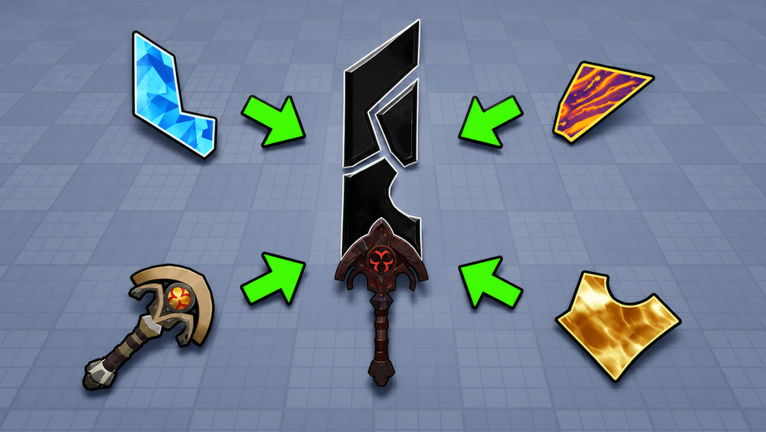
Video Guide
The ONLY Farming Guide you NEED in BROKEN BLADE
Embedded for players who want to compare the written guide with live gameplay. Use the wiki text as the verified checklist and the video as practical context.
Open on YouTubeRelated Guides
Keep researching Broken Blade
Research Base
Sources used for this guide
This wiki favors verified mechanics over filler. If a fighter, unit, weapon, pet, secret, entity, faction, skill, or code cannot be tied to an official page, in-game confirmation, or exact-match guide evidence, it is treated as unverified.